Revolutionary Changes in Aadhaar Card
Learn about the revolutionary changes coming to Aadhaar card in December 2025. New design features QR code verification, enhanced security, and digital privacy protection.
 aapbitinews

Introduction
The Unique Identification Authority of India (UIDAI) has announced a significant reform in the country's digital identity system. Starting December 2025, the Aadhaar card design will be completely transformed. The new format will feature only the holder's photograph and a secure QR code, while all personal details will be removed. This step is a major move towards protecting citizens' privacy and preventing data misuse.
Current Problems with Aadhaar Card
Misuse Through Photocopies
Currently, photocopies of Aadhaar cards are causing several serious problems. Hotels, event organizations, and various institutions demand photocopies of Aadhaar cards from customers and store them inappropriately. This is against the Aadhaar Act, but in practice, compliance is often lacking.
Data Leak Risks
With all personal information (name, address, date of birth, 12-digit Aadhaar number) printed on the card:
- Risk of Identity Theft increases
- Possibilities of fraud and deception are higher
- Danger of data leaks persists
- Information can be misused for wrong purposes
New Aadhaar Card Design
Key Improvements
The new Aadhaar card format will be extremely simple and secure:
| Feature | Old Card | New Card |
|---|---|---|
| Printed Details | Name, address, DOB, Aadhaar number | Only photograph |
| Verification Method | Offline (via photocopy) | Digital (via QR code) |
| Data Security | Low (publicly visible) | High (encrypted) |
| App Support | M-Aadhaar (old) | New Aadhaar App (updated) |
| Privacy | Low | High |
Role of QR Code
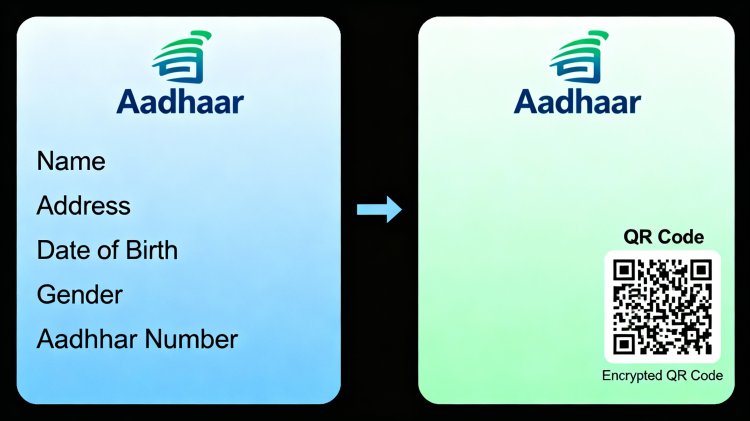
The QR code in the new design will store all important information in encrypted form. When this QR code is scanned:
- All details will be available digitally
- Biometric verification will be possible
- OTP-based verification can be done
- No printed information will be publicly visible
Legal and Regulatory Aspects
Digital Personal Data Protection Act 2023
This reform is in line with the Digital Personal Data Protection Act 2023. This law:
- Regulates digital processing of personal data
- Ensures citizens' right to privacy
- Is based on the Supreme Court's 2017 K.S. Puthaswamy judgment
Penalties and Punishments
Strict provisions now exist under the Aadhaar Act:
- Penalty up to Rs 1 crore for offline use of Aadhaar number or biometric data without permission
- Strict punishment for verification without consent
- Legal action for data misuse
Implementation Timeline
December 2025
- From December 1, 2025, new rules will be presented in Parliament for discussion
- There is full possibility of implementing these rules within December 2025
Validity of Old Cards
- Current Aadhaar cards will not be immediately invalidated
- Old cards will continue to function on their validity
- However, new cards will need to be obtained when current card validity expires
New Aadhaar App
Features
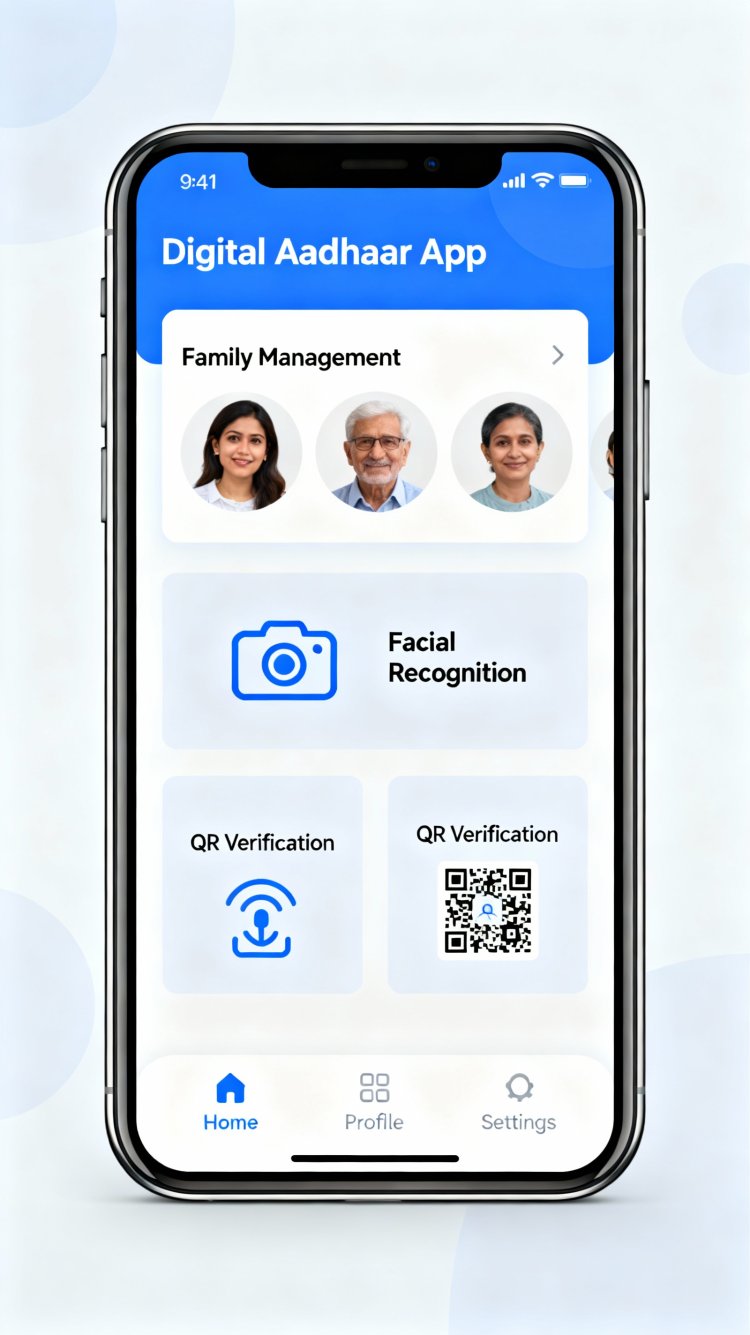
The new Aadhaar app developed by UIDAI will provide several advanced features:
1. Family Management
- Facility to add entire family members in one app
- All members' information centralized in one place
- Verification of all family members from one platform
2. Facial Recognition
- Verification using face authentication
- More secure and faster identification
- Safe use of biometric data
3. Digital Verification
- Instant verification through QR code scanning
- Complete compliance with DPDP Act
- Use in both online and offline services
4. Address Update
- Easy address changes through the app
- Updated information immediately reflected in records
5. Launch Timeline
- New app will be launched in 18 months
- This new app will replace the old M-Aadhaar app
Benefits and Facilities
Increased Data Security
The new format will provide the following benefits:
- Minimum information in printed form, preventing photocopy misuse
- Encrypted data, making unauthorized access impossible
- Digital-centric verification method
- Full respect for the right to privacy
Convenience for Citizens
- Simple and easy-to-recognize card
- Time-saving through digital verification
- All family information in one app
- Fast services with better security
Guidelines for Institutions
- End of practice of storing photocopies
- Digital verification made mandatory
- Legal obligations clarified
- Increased accountability
Challenges and Considerations
Digital Literacy
- Lack of digital literacy in some parts of the country
- Complexity for elderly and rural population
- Equal distribution of QR code scanning facilities
Offline Verification
- Need for offline verification in certain circumstances
- Digital medium failure in emergency situations
Transition Period
- Coordination between old and new systems
- Preparation of institutions for new procedures
International Context
Similar trends are being observed in many countries worldwide:
- European Union's GDPR (General Data Protection Regulation)
- Data privacy laws in the United States
- Digital identity reforms in other Asian countries
This initiative by India brings the Aadhaar card in line with world-class security standards.
Conclusion
This change in the Aadhaar card is an important step towards Digital India. With this new format:
- Citizens' personal information will be more secure
- Identity theft and fraud will decrease
- Right to privacy will receive legal protection
- Digital transactions will become more reliable and secure
This rule, to be implemented in December 2025, signals a better and more secure digital future for Indian citizens. However, during this transition, all stakeholders—government agencies, private institutions, and the general public—will need to work together to ensure this change is smooth and effective.