






Aadhaar 2.0: Comprehensive Guide to New Security Standards & DPDP Act
Master the new changes in Aadhaar Card design. A 1000+ word guide on QR-based verification, DPDP Act 2023, and benefits for students and APAAR ID integration.

Digital Identity Evolution: A Comprehensive Guide to Aadhaar Card 2.0 and Data Privacy Standards (2025-2026)
Executive Summary for Students & Citizens
India's digital identity landscape is undergoing a revolutionary shift. To align with the Digital Personal Data Protection Act 2023, the Unique Identification Authority of India (UIDAI) is transitioning towards a 'Privacy-First' Aadhaar design. This guide analyzes the transition from physical-data cards to secure QR-encrypted identities, focusing on how this affects students, scholarships, and general data security.
1. The Problem: Why Aadhaar 1.0 needed a Change?
For over a decade, the physical Aadhaar card served as a primary identity document. However, its design had a significant vulnerability: Static Data Visibility. Every time a citizen shared a photocopy of their Aadhaar with a hotel, school, or telecom provider, they were handing over their full name, 12-digit UID, address, and date of birth in plain text.
The Risks identified by Cyber Security Experts:
- Identity Theft: Scammers using photocopies to open fake bank accounts or procure SIM cards.
- Data Harvesting: Unregulated institutions creating databases of citizens without consent.
- Privacy Violation: Lack of control over who sees which part of the sensitive personal data.
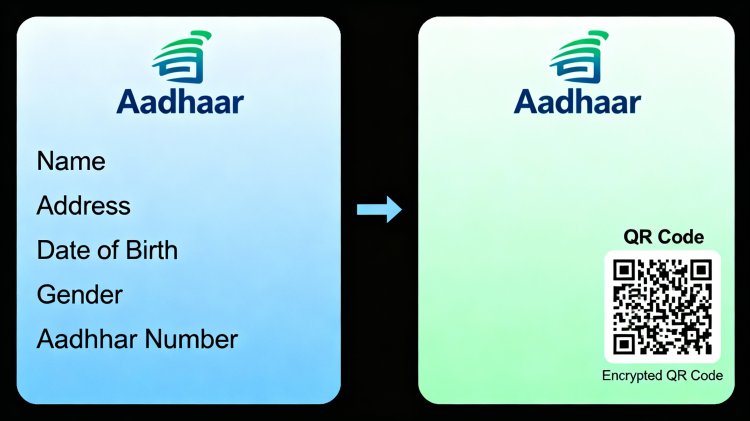
Infographic: The transition from printed details to QR-based secure verification.
2. Aadhaar 2.0: The QR-Centric Design Philosophy
Starting late 2025, the new Aadhaar format will prioritize "Minimalism & Encryption." The most striking change is the removal of printed personal details. The new card will feature only the photograph of the holder and a highly secure, tamper-proof QR Code.
| Comparative Feature | Traditional Aadhaar | Aadhaar 2.0 (New) |
|---|---|---|
| Visible Info | Name, Address, UID, DOB | Photograph & QR Code |
| Verification | Physical/Manual Check | Digital Scanned (Encrypted) |
| Security level | Vulnerable to Photocopy fraud | High (End-to-End Encryption) |
3. Legal Framework: DPDP Act 2023 & Aadhaar
The transformation is not just a design choice but a legal mandate. The Digital Personal Data Protection (DPDP) Act 2023 establishes India's first comprehensive framework for data privacy. Under this act:
- Data Fiduciaries: Organizations (Banks, Schools, Hotels) are responsible for protecting the data they collect.
- Purpose Limitation: Institutions can only use Aadhaar for the specific purpose the citizen consented to.
- Hefty Penalties: Misuse of Aadhaar data or unauthorized storage of Aadhaar numbers can lead to fines up to Rs 250 Crore in severe cases.
4. Special Section: Impact on Students & Education
For the student community, Aadhaar is now linked to the APAAR ID (Automated Permanent Academic Account Registry), also known as the "One Nation One Student ID." The new Aadhaar security standards ensure that:
- Safe Scholarship Transfers: Direct Benefit Transfer (DBT) will be more secure through biometric/face-auth via the new app.
- Digital Degrees: Verification of educational credentials through DigiLocker and the new Aadhaar QR system.
- Seamless Admissions: Students can share 'Masked Aadhaar' or QR codes for admission verification without revealing their full address or UID number.
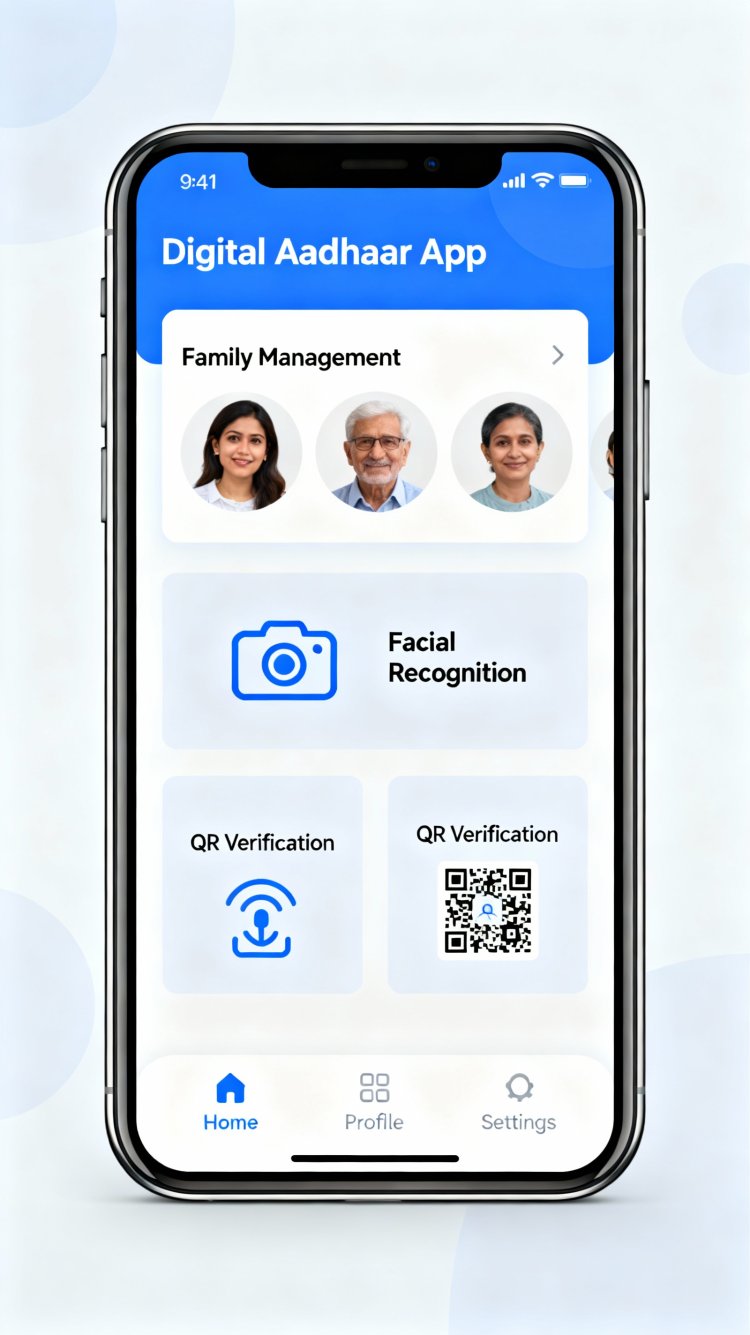
The upcoming Aadhaar App will feature Facial Recognition and Family Management modules.
5. Future Features: Facial Recognition & AI Integration
The upcoming UIDAI Mobile App (slated for full launch in 18 months) will move beyond OTP-based authentication. It will integrate:
- Face-Auth: Using AI-based facial recognition for instant, non-contact verification.
- Family Vault: Managing Aadhaar details of minor children and elderly parents in a single digital wallet.
- Offline Verification: Allowing QR codes to be scanned even in areas with limited internet connectivity using secure local keys.
Conclusion: Embracing the Digital Trust Era
The "Revolutionary Changes" in Aadhaar represent India's maturity as a digital superpower. By shifting from physical cards to encrypted digital simulations, the government is returning the Right to Privacy to the individual. For students and citizens in Uttarakhand and across India, this change means more security, less fraud, and a more efficient Digital India.
Educational Reference: This article is part of Aapbiti News' Digital Literacy initiative. All information is based on the UIDAI Policy proposals and the Digital Personal Data Protection Act 2023. It is intended for informational and academic purposes only.
Sources: UIDAI Official Portal, Ministry of Electronics & IT (MeitY), National Education Policy (NEP) 2020 Documentation.
What's Your Reaction?
 Like
0
Like
0
 Dislike
0
Dislike
0
 Love
0
Love
0
 Funny
0
Funny
0
 Angry
0
Angry
0
 Sad
0
Sad
0
 Wow
0
Wow
0